
Hello there, I'm
Max Cunha Münzer
Game Programmer
Recent Projects:
DAWNBREAKER
Fast-paced parkour runner
be fast. be stylish. be better.
Unreal Engine | C++ and BP

Return To Earth
Physicsfocused
Space Puzzle - Simulation
Unreal Engine | C++ and BP

Custom Patternrecognition
VR-Patternrecognition Prototype
Unreal Engine | C++ and BP
About Me:
Hello there, I'm Max!
I'm a game programmer from Germany. Growing up in a household where gaming was nowhere to be found, my first contacts with video games started in first grade and were rather scarce. But once I had my first encounters with the medium, I was hooked, consuming everything game-related I could find.I quickly had the desire to do something in the field of video games in the future, exploring various disciplines. From programming, to illustrating and concept art, to 3D-modelling and animation.After completing my high school diploma, I enrolled in Game Production & Management in Neu-Ulm. There I rediscovered my passion for programming, which I have been following ever since. Striving to make my dream a reality.
Contact Me:
© 2026 by Max Cunha Münzer. All rights reserved.
DAWNBREAKER:

DAWNBREAKER is a fast-paced parkour runner, in which the players take on the role of Dawn, who tries to move through the terrain as stylishly and quickly as possible to impress her fans.BE FAST. BE STYLISH. BE BETTER.
Development Info:
Role: Game Programming
Team Size: 5 Team Members (4AM)
Development Time: 3 Months
Platform: PC
Development Environment: Unreal Engine 5
C++ and Blueprints
Technical Deep Dive:
Movement in DAWNBREAKER
Dawn’s movement is the core of all gameplay. It is what the player does throughout the entire game and the primary source of fun in DAWNBREAKER. That’s why it was crucial to maintain a high level of control over the movement mechanics. To achieve this, DAWNBREAKER utilizes a custom movement system built on Unreal Engine’s Chaos system.
Requirements:
Reliability
Great Game Feel
Flexible Moveset
Fast Stat Iteration
Physics:The custom movement system draws elements from classic, momentum-based movement systems, featuring continuous acceleration up to maximum speed and inertia when turning. This, along with the gravity curve, can be adjusted individually for each state to simulate different centrifugal forces depending on traction, or to apply varying levels of gravity depending on the current state.This runs on the Async Physics Tick to ensure reliability across all framerates and devices.
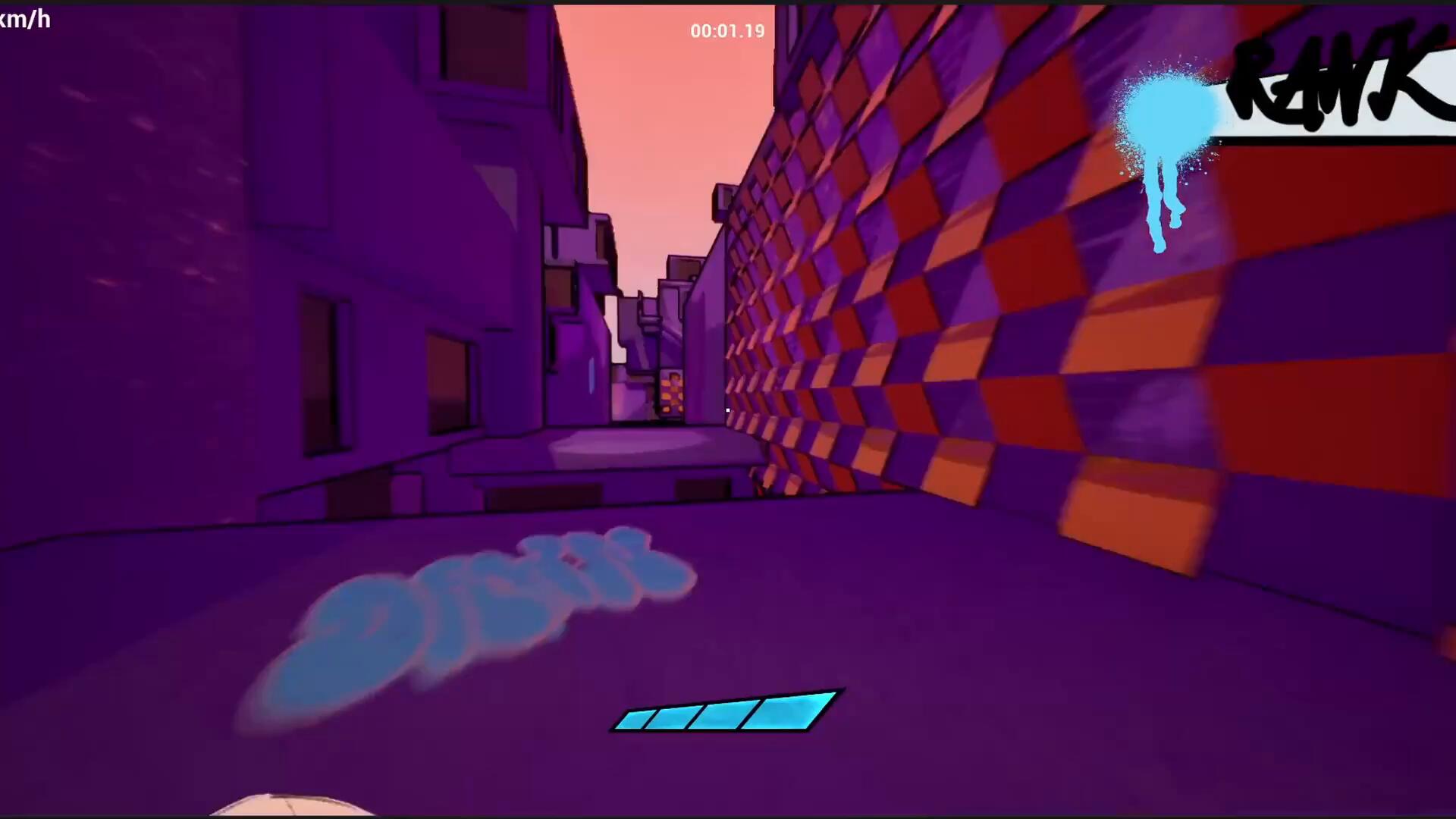
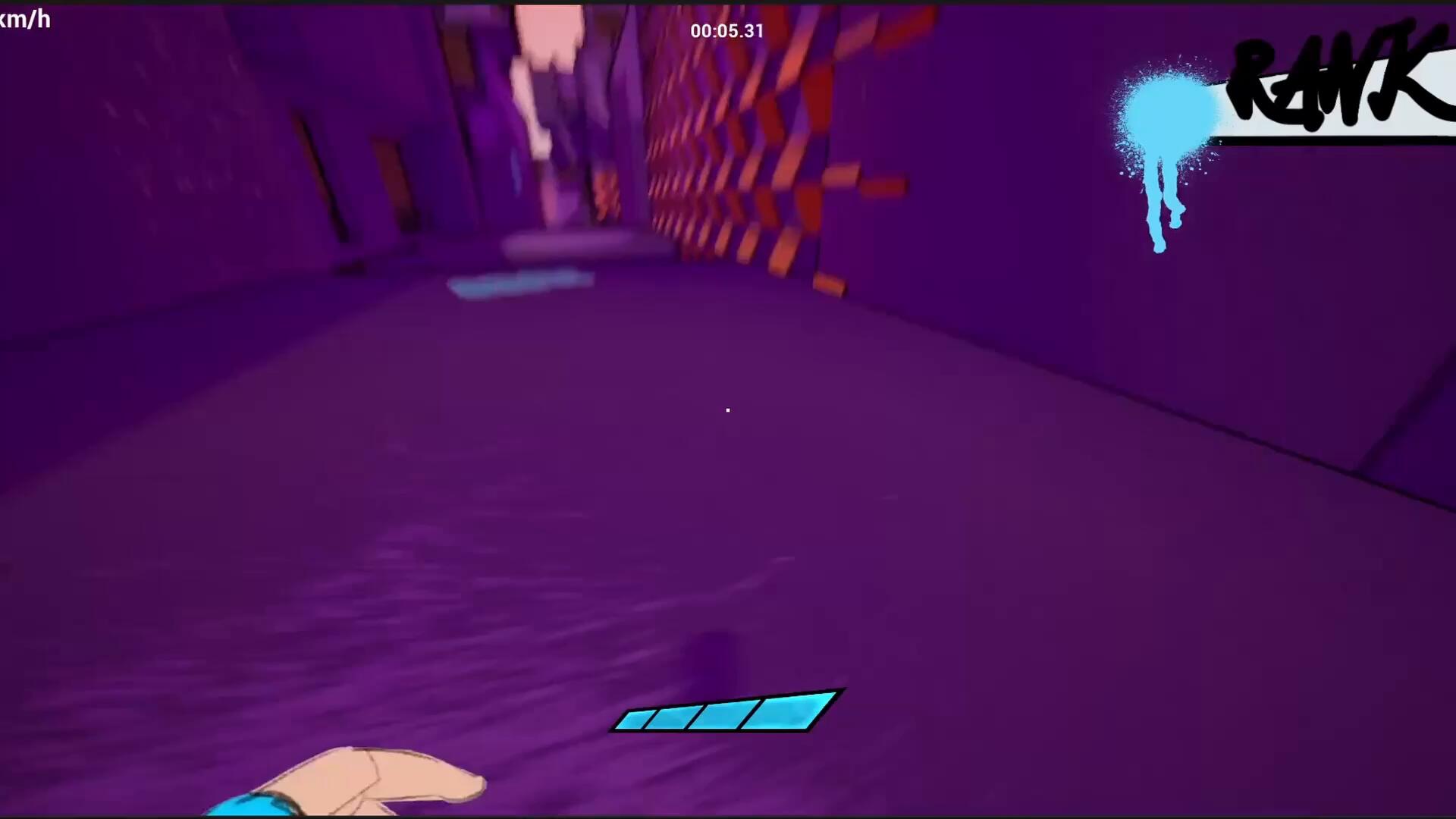
Comparison of different stat distributions
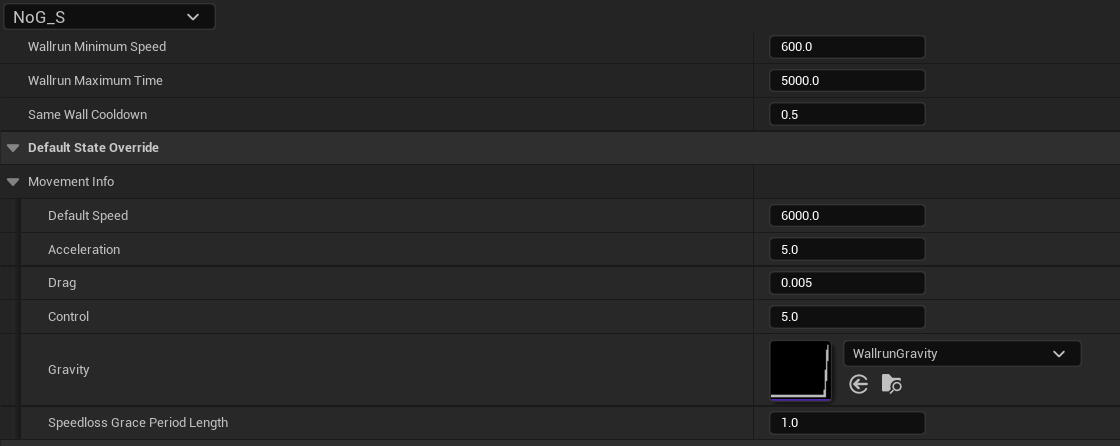
Iteration and flexability:The playercharacter is controlled via a state machine to decouple code and prevent edge cases.To enable rapid moveset iteration, flexibility was the top priority for the state machine design. To achieve this, each state is only aware of itself. This makes all states fully independent, allowing them to be modularly combined as needed.To refine each state, only the transition logic and the specific movement behaviour are implemented internally. The stats themselves are defined in a Data Table, making them fast and easy to tweak during testing.
Look and feel:To ensure every movement mechanic feels satisfying and impactful, visual and audio feedback are tailored to each action.Every individual state allows configuration of FOV, speed lines, camera shake, animations, and sound effects.
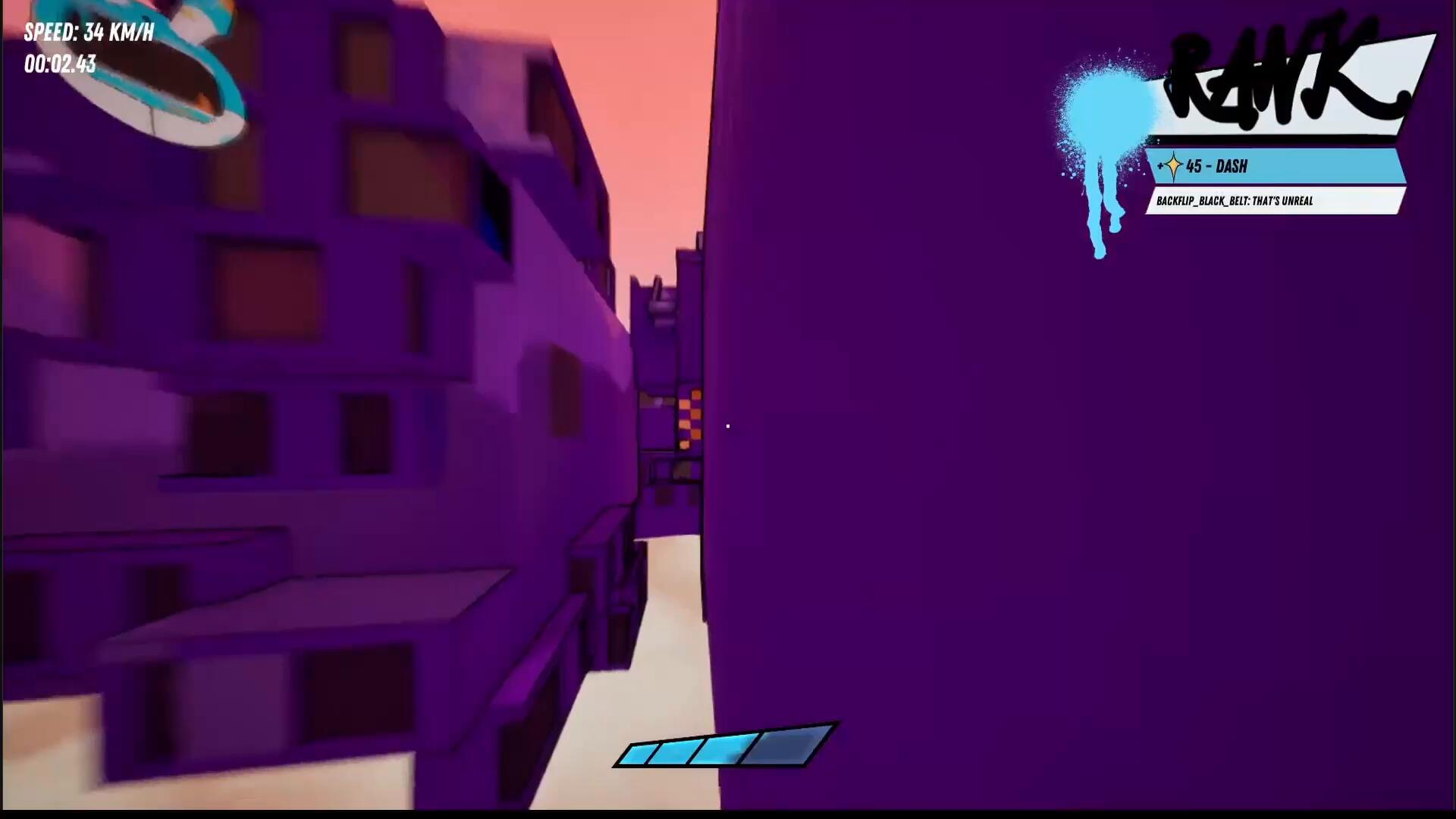
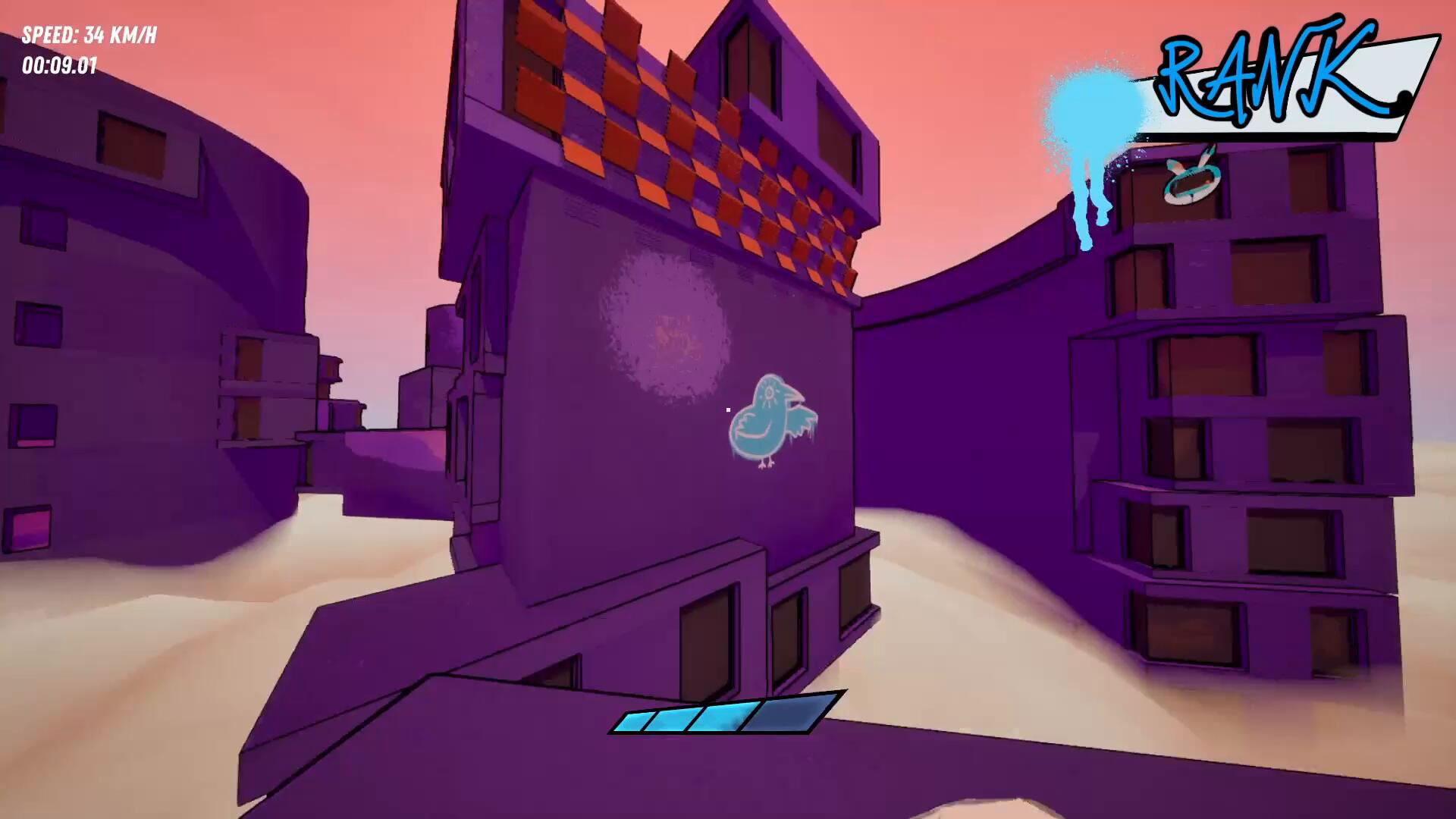
Comparison of look and feel
Achievements:
Nominee: HNU Werkschau July 2026 | Best Art
Winner: HNU Werkschau July 2026 | Best Sound
Winner: HNU Werkschau July 2026 | Best Game
Winner: HNU Werkschau July 2026 | Players Choice
© 2026 by Max Cunha Münzer. All rights reserved.
Return To Earth:

Return To Earth is a puzzle-simulation, where players strand in space far away from earth. With the help of your assisting board-AI IVI you collect old scraps to repair your ship.Return To Earth focuses on fun physics interactions in a zero gravity environment.
Development Info:
Role: Game Programming, Tech Art
Team Size: 5 Team Members (TEAM T.O.N.)
Development Time: 3 Months
Platform: Meta Quest 3/3s
Development Environment: Unreal Engine 5
C++ and Blueprints
Technical Deep Dive:
Repair Blueprints:
In Return to Earth, blueprints serve as the primary quest mechanic. Players collect and insert artifacts into these blueprints to unlock new tools and repair their ship.
Requirements:
Beginner-friendly and fast creation of new blueprint variations
Performant
Flexible
Fast and easy navigation through different blueprints
Reliable recognition of matching elements
The system consists of two core components:
Blueprint Manager: Creates repair blueprints based on premade data assets.
Artifact Slots: Checks if the player is filling the slot with a proper item
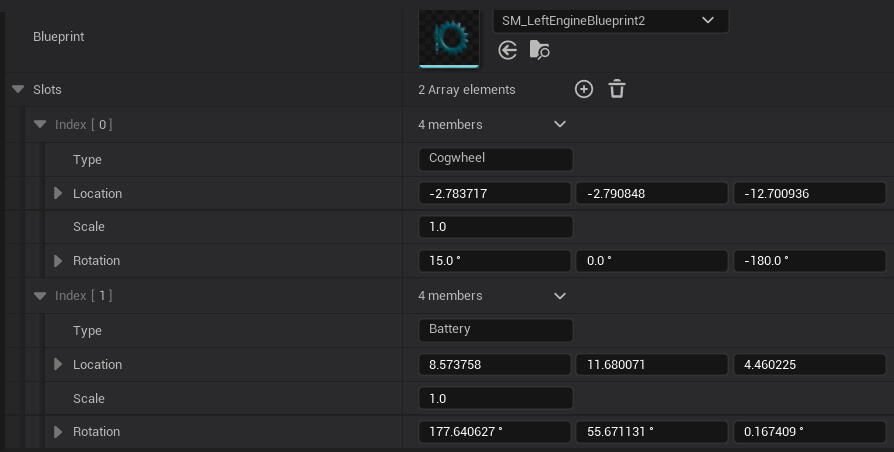
For the blueprints to be flexible and easy to navigate, every unique blueprint is created with the help of data assets.
The data assets determine where, what kind of slot is. To create new blueprints designers can simply build the finished blueprint in any world and copy the stats of the slots into the data asset.
To keep the system performant, I implemented object pooling for the ArtifactSlots, reusing spawned slots rather than constantly creating and destroying them
To insert the artifacts players have to aligne the artifact with its corresponding slot. If the artifact will be inserted is determined by the artifacts rotation, distance to the slot, it's scale and the artifact type.
Since bodies with any kind of symmetry have multiple rotations that look the same, comparing rotations isn't quiet as straight forward as it sounds.
Z-Rotation: 0° vs -137°
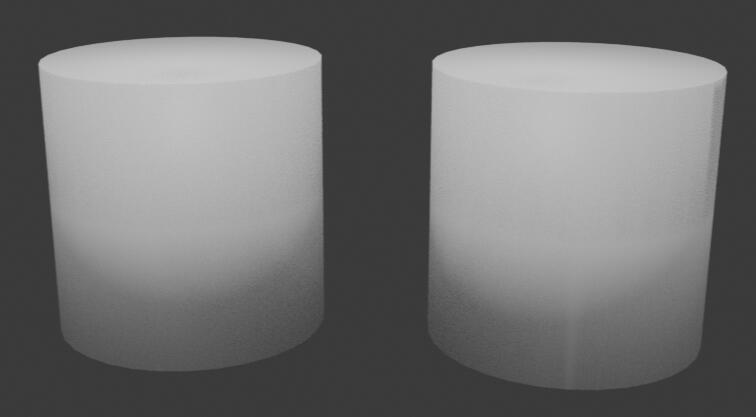
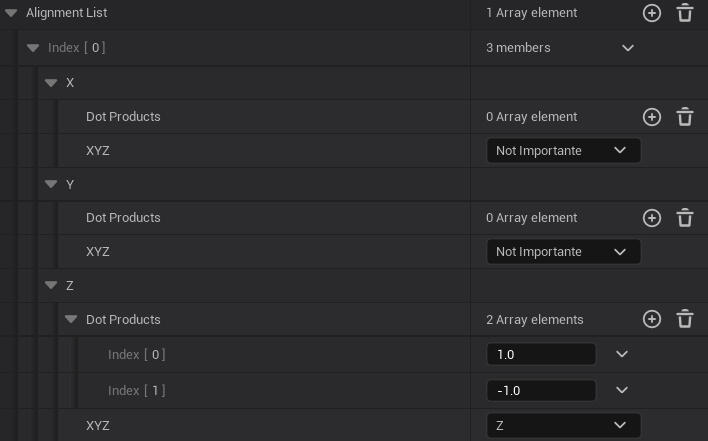
To compare them the up, right and front vectors of the artifacts and slots were used. Every type of artifact got an Direction Dictionary (Data Asset) dictating what vectors with which angles can correspond to the slots‘ vectors.
Static Machinery:
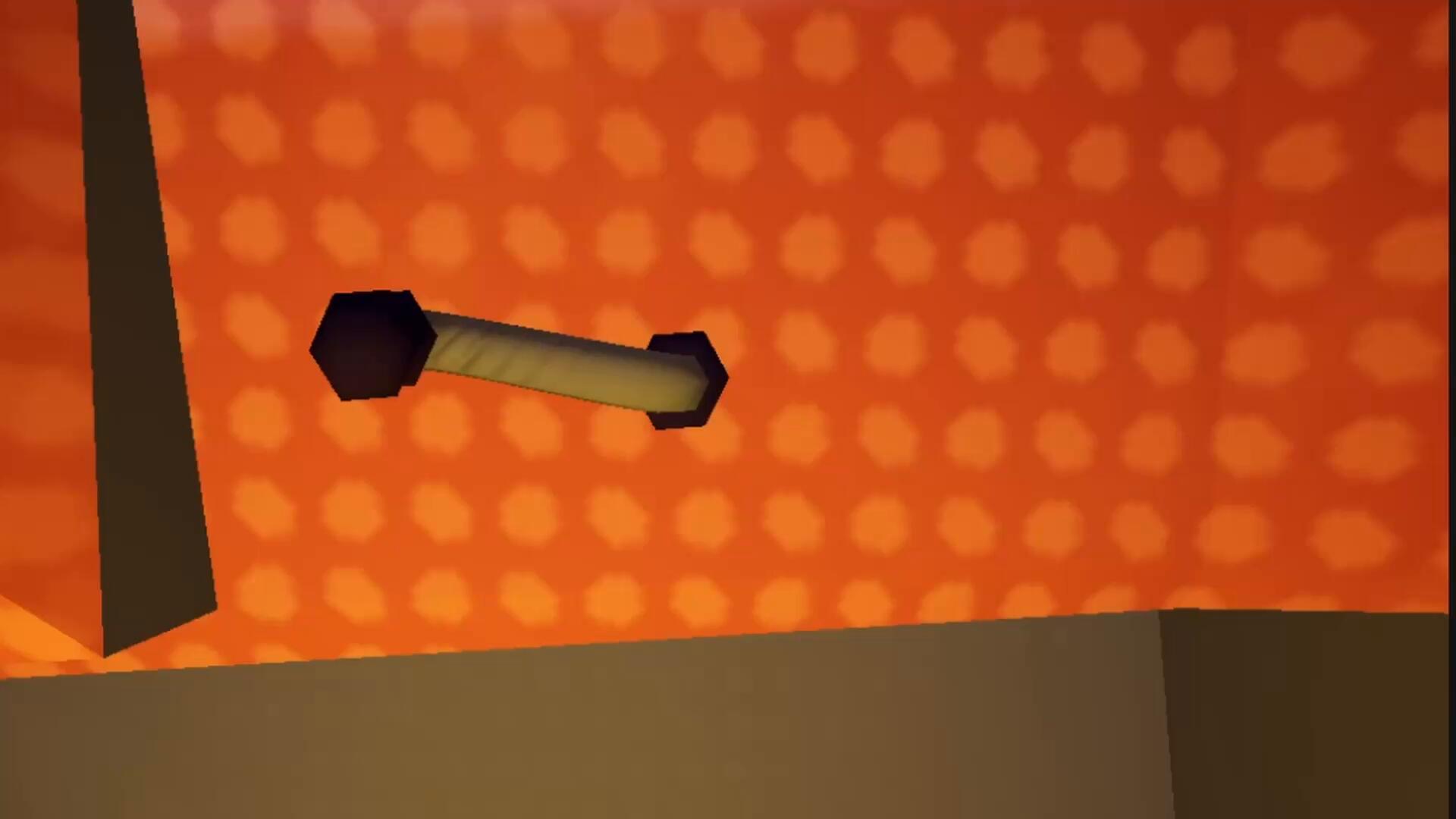
In Return to Earth the player uses different machines to controll the ship. Since these machines are static we can’t simply attach them to the players hand, instead we have to calculate the machines handle to follow the players hand, within it’s constraints.Most handles only require comparing two locations, but the crank was more complex: it needed to track the hand’s circular motion and determine the correct direction of rotation (Clockwise vs. Counter-Clockwise).
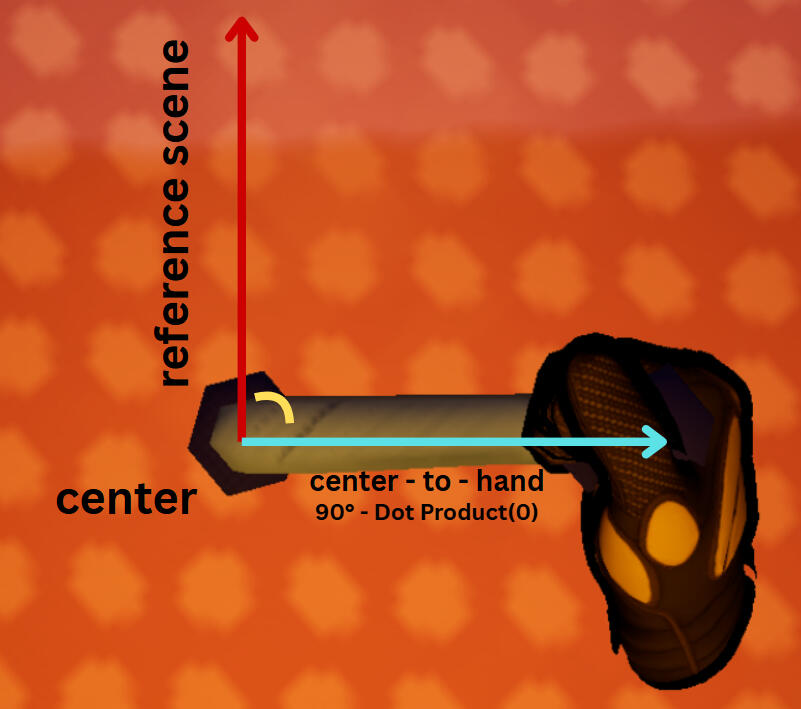
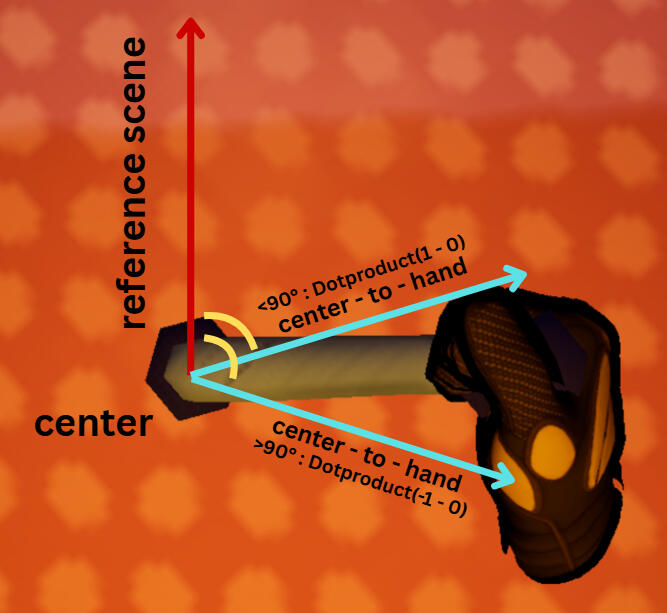
The Problem: Using a standard Dot Product between the hand-to-center vector and the handle-to-center vector only provides the size of the angle. It couldn‘t distinguish which way the crank was rotated, causing the crank to only spin in one direction.The Solution: To solve this, I introduced a Reference Scene Component offset by 90° to the handle. By calculating the Dot Product between the hand's position and this reference vector, the direction the crank should rotate could be distinguished. A perfect alignement of the hand and handle meant a value of 0. Now as the player moves their hand, the angle to the reference vector either narrows (resulting in a positive Dot Product) or widens (resulting in a negative Dot Product).
This approach allowed the system to distinguish between clockwise and counter-clockwise movement, ensuring the crank follows the player’s hand.
Achievements:
Nominee/Top 3: HNU Werkschau Feburary 2026 | Best Mechanics-Award
© 2026 by Max Cunha Münzer. All rights reserved.
VR-Patternrecognition:
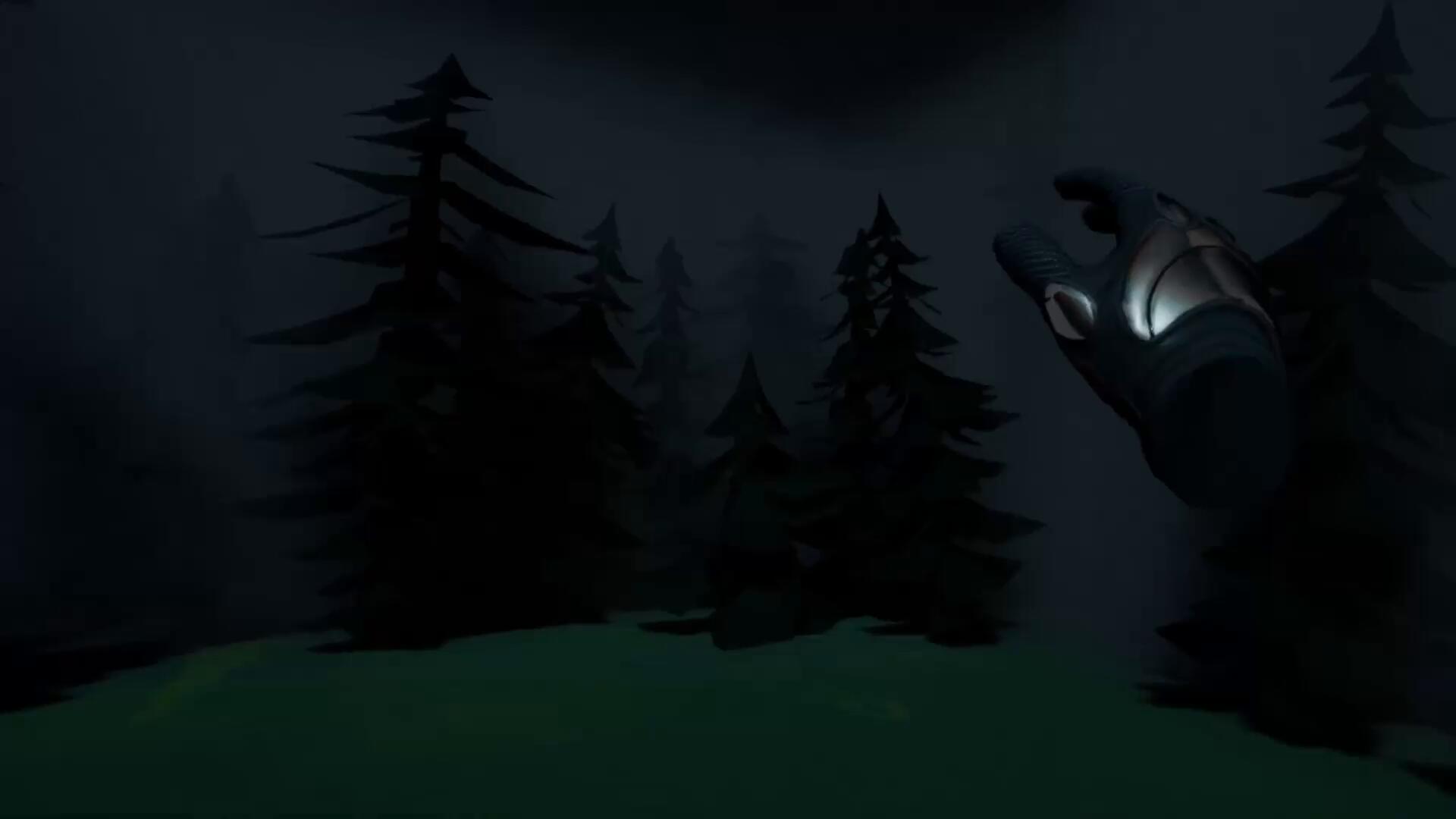
This project is a technical prototype featuring a 2D-shape pattern recognition algorithm operating in 3D VR space, built in Unreal Engine using C++.Players draw runes in the air with their right hand, enabling them to cast corresponding spells with the wand in their left hand.
Development Info:
Role: Game Programming, Tech Art
Team Size: Solo Project
Development Time: 2 weeks
Platform: PC-VR
Development Environment: Unreal Engine 5
C++ and Blueprints
Technical Deep Dive:
Patternrecognition
Pattern recognition occurs after the player draws a rune in the air with their right hand to select a new spell.
Requirements:
Orientation-Independent
Flexible Stroke Order
Single-Stroke Gestures
Runtime Optimized
Plane fitting:
First, a common plane is determined to simplify the shape matching process. For this purpose, three well-known algorithms — PCA, Least Squares, and a custom expanded Least Squares algorithm — were evaluated and compared based on reliability and runtime cost. Based on these metrics PCA was chosen for the prototype.Using the directional vectors determined by PCA, the positions of the points are projected onto a 2D coordinate system via the dot product.The center calculated in the PCA serves as the origin of the new coordinate system.
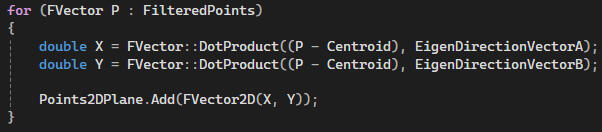
Code snippet for transforming points onto a 2D coordinate system
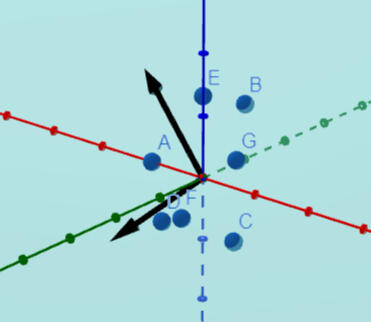
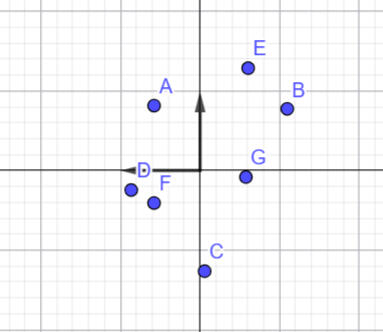
Projection from 3D to 2D space
Shape matching:
For shape matching, two algorithm families were were considered: the $1 algorithm family and Shape Context algorithms. However, because neither fulfilled the requirements due to either being to cost inefficient or not reliable enough, a custom algorithm was developed.
Custom algorithm:
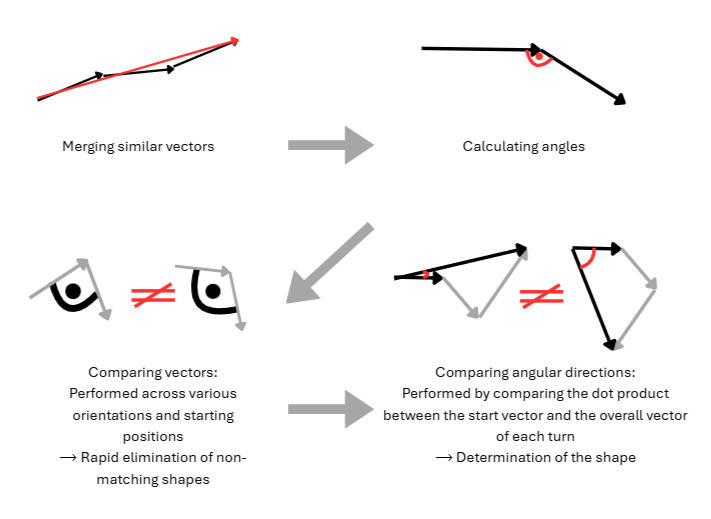
Although the algorithm has a few small limitations, it fully meets the requirements of this particular project.
© 2026 by Max Cunha Münzer. All rights reserved.